

We know how quickly the office calendar can crowd out the dog’s schedule. A new commute, a different school pickup, or one more in-person workday can turn a workable routine into a long gap between walks. September is a good time to put the whole day on paper.
Start with what your dog currently does, not with an ideal schedule from the internet. Note the morning outing, meals, time alone, afternoon break, and evening walk. Then add the actual times you leave and return, including the trip from the office to your front door.
Find the Gap You Need to Cover
Many households do not need a completely new routine. They need someone to take care of one specific part of it reliably. That might be the midday walk on office days or an earlier visit when the commute starts before the rest of the household is awake.
Write down who owns each part of the plan. A named person with a backup makes the plan easier to count on than “One of us will be home around lunch.” Include the occasional meeting that runs long and the day when no one is home.
The best walk length depends on your dog’s age, health, comfort, and activity needs. A veterinarian can help with exercise restrictions or a change in physical ability; our dog exercise guide offers questions to bring to that conversation.
Practice the Handoff Before the Busiest Day
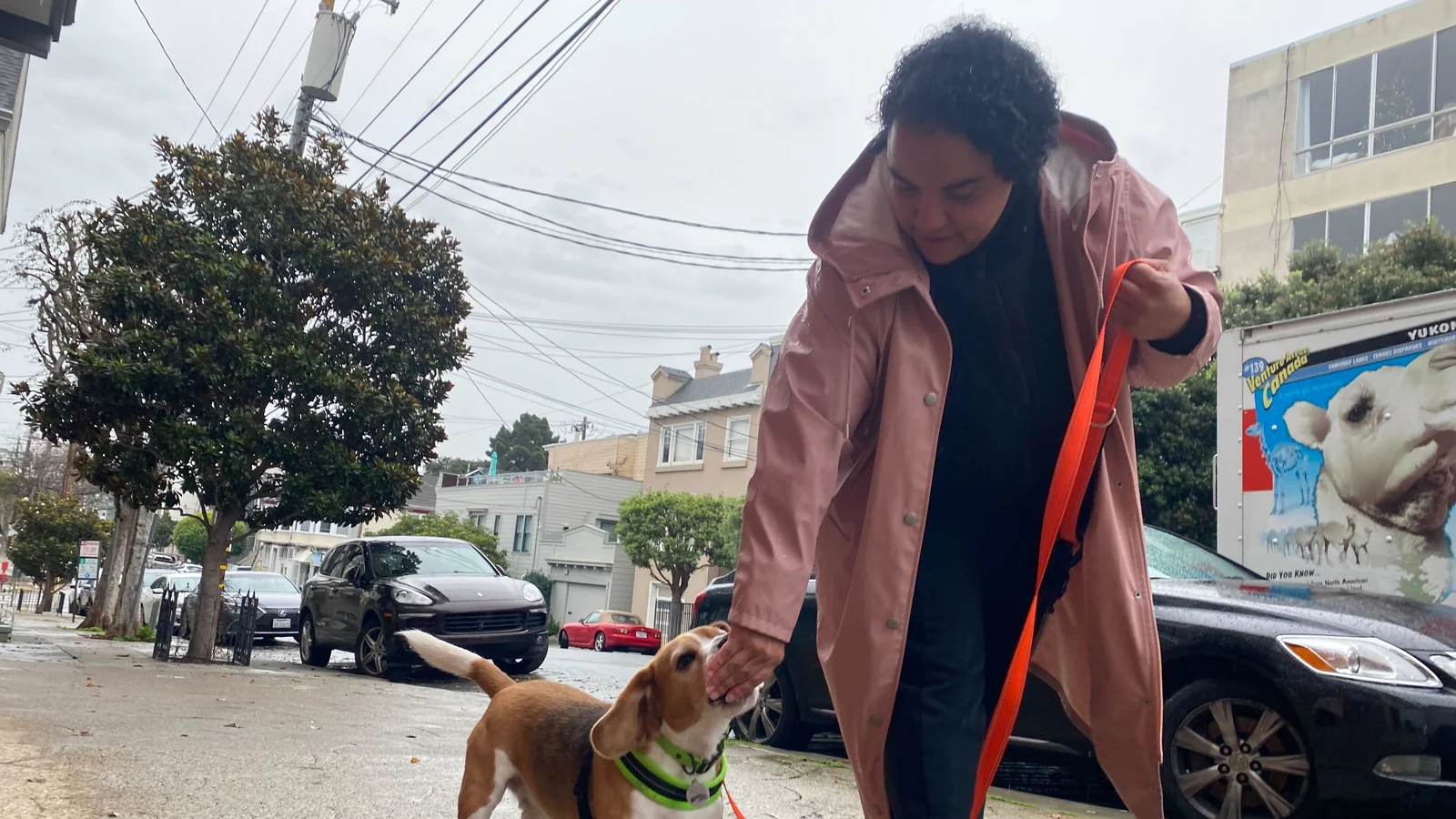
If a walker is joining the routine, leave enough time to introduce the people, equipment, and access instructions. The first visit should not depend on finding a leash in a drawer while you are already late for a meeting.
Show where the harness goes, how the building door latches, and what to do if the elevator is busy. In a San Francisco apartment building, the route from your unit to the sidewalk can matter as much as the route outside.
For a dog who worries about unfamiliar people, discuss the introduction in advance. Some dogs need a little time to warm up to someone new, so a slower start may be part of making the service work well.
Keep the Walk Predictable Without Making It Rigid
Consistency can mean familiar handling, a recognizable sequence, and clear communication. It does not require walking the same blocks at exactly the same minute every day. A street closure, crowded sidewalk, or a dog waiting at the corner may make another route more comfortable.
Share the things your dog enjoys and the situations that are difficult. “Likes sniffing on the quieter side streets; needs more room around delivery carts” is a useful note. Include any training cues you already use so the walker does not have to guess what your dog understands.
Sniff and Go’s private dog walks are always on leash and always use positive reinforcement to help each visit be something your dog looks forward to, with every walk built around your dog’s comfort. You can review our San Francisco service areas before planning the days you want covered.
Watch What Happens Between Walks
A midday visit addresses a practical care need. It is not, by itself, treatment for a dog who panics when left alone. The American Animal Hospital Association (AAHA) offers separation anxiety guidance that describes signs such as persistent vocalizing, pacing, destructive behavior, and distress when you leave, and recommends veterinary help when needed.
If you are seeing those signs, keep a record and talk to your veterinarian. A short video from a home camera may help show what happens after you leave. Barking has many causes, so a veterinarian or trainer can help you sort out what you’re seeing.
Tell the walker about any treatment or training plan so the visit can fit the advice you have received. Keep the questions separate: “Who will provide a midday break?” and “How do we help this dog feel safe alone?” may need different kinds of support.
Review the First Week Using Actual Observations
After the first few visits, compare notes. Was home access smooth? Did the timing work? Were there routes the dog preferred, equipment issues, or information missing from the instructions? Make small changes based on those observations.
You do not need to wait for the entire routine to be perfect before getting help. We’d love to hear about your schedule and your dog. A clear handoff and a realistic plan give you a great starting point, even when workdays run long.