

Almost every new client we meet has the same story about leash pulling. They've tried a no-pull harness. They've tried a head halter. They've been searching some version of "how to stop a dog from pulling on the leash" on and off for months.
The good news is that loose leash walking is a trainable skill for almost every dog, including adult dogs with years of practiced pulling. The fix isn't a piece of equipment. It's a change in what you do on the walk, and it works in San Francisco just as well as anywhere else.
Pulling isn't disobedience. It's reinforced behavior.
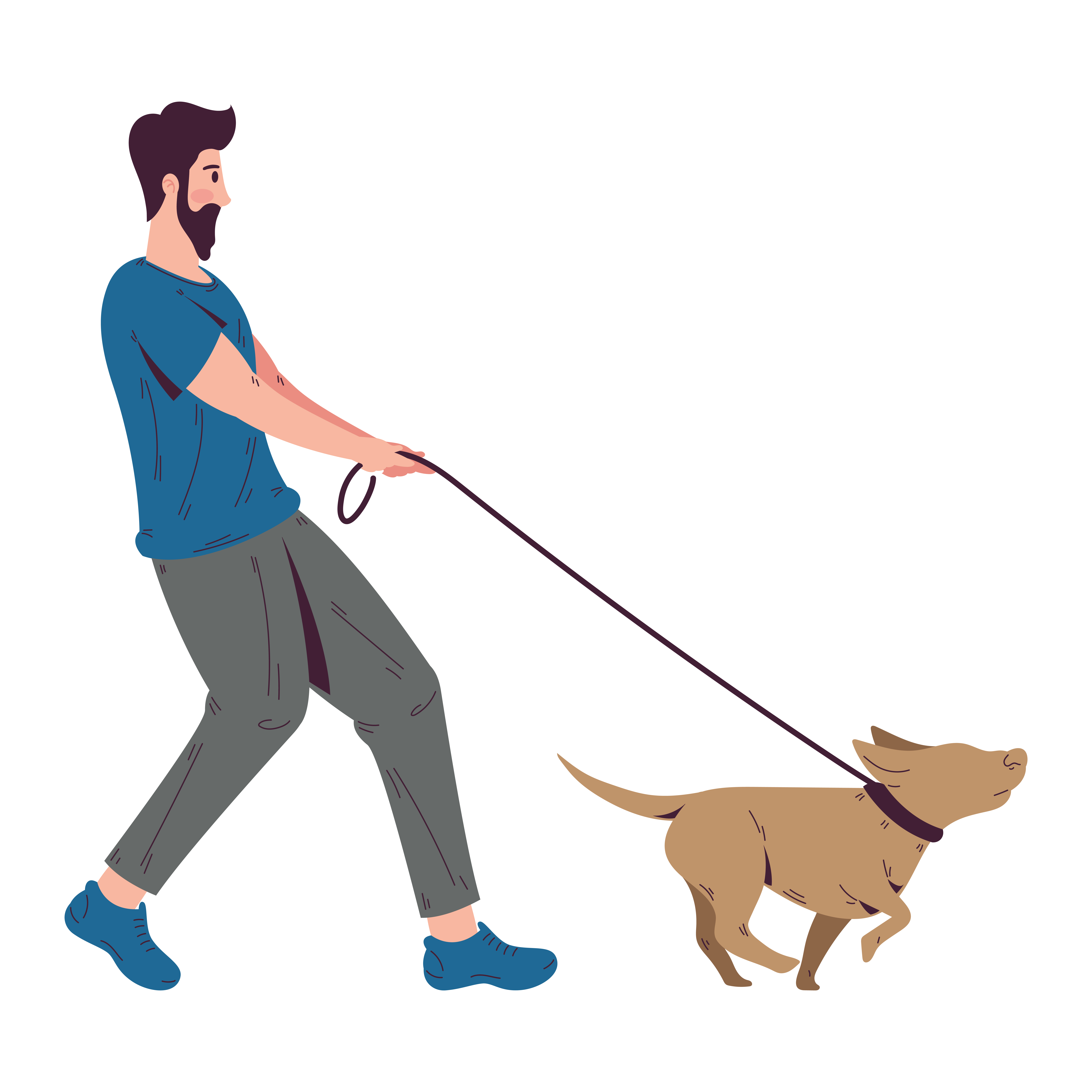
Every time your dog pulls forward and gets to the thing they wanted (the squirrel, the fire hydrant, the corner where you always turn, more sidewalk), pulling worked. It got reinforced. Dogs do what works. Pulling works because forward motion is usually the reward, whether anyone intends it or not.
A dog who pulls isn't being bad. They're being a dog. The job isn't to make your dog stop wanting to go forward. It's to make pulling stop being the way they get there.
Why the gear doesn't fix it
Most no-pull harnesses, head halters, and martingale collars are physical management. They make the pulling slightly less painful for you, or slightly more awkward for the dog, but they do not change the underlying contract. The dog still learns that leaning into the leash gets them where they want to go, just with a piece of equipment that adjusts the angle.
Some of these tools are fine as training aids. A well-fitted front-clip harness is a useful interim while you work on the actual skill. A head halter, used carefully, can take the edge off a powerful dog while you train. But the gear is the bridge, not the destination. You do not get a dog who walks nicely. You get a dog who tolerates a head halter.
Prong collars and e-collars work differently. They add discomfort or pain when the dog pulls. They can produce dramatic short-term results. They can also introduce new problems: dogs who become fearful on walks, shut down emotionally, or develop reactivity that wasn't there before the tool was introduced. It's not an approach we use or recommend.
Three things worth committing to
Pick a six foot leash, a properly fitted harness or flat collar, and a treat pouch you can reach without looking. Then commit to these three practices. Every walk. Every person who holds the leash.
1. The leash going tight is a stop sign.
The instant your dog leans into the leash and it tightens, you stop moving. Don't yank. Don't jerk. Don't say no. Just stop. Plant your feet. Let the leash do the talking. Your dog learns the exact thing you want them to learn: when the leash is tight, the walk stops. When the leash is slack, the walk continues.
Most dogs start to figure this out within the first handful of reps if you're consistent. Adult dogs with years of practiced pulling take longer than puppies, but the process is the same.
2. Reward the position you want.
When your dog is in the loose-leash zone (anywhere within a foot or so of your leg, leash bowed slightly), feed them. Not every time, but often enough that the position pays. A piece of kibble, a small training treat, a verbal "good." This is the part most owners skip entirely, and it's the most important part of the whole protocol.
You're not bribing the dog. You're paying them for the behavior you want, just like you pay yourself for going to work. After consistent reinforcement, the dog starts to default to the position because it pays. From there you can shift to a variable rhythm before fading food out gradually.
3. Change direction when they get stuck.
When your dog locks on to something across the street and the standing-still trick is not working, turn around and walk the other way. Calm, no announcement. You go, and the dog naturally comes with you, back into the loose-leash zone, and you feed them, and you keep going in the new direction.
Direction changes do two things. They unstick the moment. And they teach the dog that you, not the trigger, decide where the walk goes. After the first dozen U-turns, dogs start checking back in with you before they fully lock on. That check-in is the behavior you are actually building. The loose leash is the side effect.
What San Francisco makes harder (and what to do about it)
Four-foot sidewalks. Constant pedestrian traffic. E-scooters from nowhere. Restaurant patios that funnel everyone into the bike lane. Hills that change your dog's pace whether they like it or not. SF is not an easy environment to train loose leash walking in.
Two adjustments that help. First, pick your training blocks. Do your stop-and-go and direction-change work in the lowest distraction environment you can find. Start at home if you can, in your living room or backyard, before taking it outside. When you're ready for walks, look for the quietest streets at the quietest time of day. Build the skill where it can succeed, then add difficulty.
Second, accept that the busy walk isn't the training walk. If you have to get from your apartment to the vet in fifteen minutes through downtown, that's a logistics walk. Use a front-clip harness, give yourself permission to just get where you're going, and save the training for dedicated blocks. Mixing the two will frustrate both of you.
When to bring in help
If you've been working on this consistently and not seeing much change, something else is usually going on. The dog may be over threshold from anxiety or reactivity and unable to learn at that level of intensity. The reinforcement may not be motivating enough for the environment. Or the approach isn't consistent across everyone in the household.
A good next step is having a professional reinforce the skill on daily walks. Our BetteR+ Dog Walks work on loose leash walking every day, supported by CPDT-KA trainers, so the practice doesn't stop between your training sessions.
If you need more intensive support beyond that, working one-on-one with a qualified trainer is worth considering. Look for a CPDT-KA, IAABC, or KPA-CTP credentialed trainer who works with positive reinforcement. We offer training services as well if you'd like to keep it all in one place.
Loose leash walking: common questions
How long does it take to stop a dog from pulling on the leash?
Timelines vary, but most dogs we work with show meaningful improvement within a few weeks of consistent practice. If everyone in the household is using the same approach on every walk, progress tends to come faster. Think of it like going to the gym: showing up once a week while skipping the other days will get you somewhere eventually, but consistent effort across the board is what moves things along. Four to six weeks or more is a reasonable window to expect real change, and some dogs take longer, especially adult dogs with years of practiced pulling to work through.
Do no-pull harnesses actually work?
A well-fitted front-clip harness is a useful management tool while you train the underlying skill, but it is not a fix on its own. The dog learns that pulling against the harness redirects them sideways, not that pulling stops working. The harness manages the symptom; the training addresses the cause. Use a front-clip as the bridge, train loose leash walking as the destination.
Are prong collars or e-collars faster?
Aversive tools can suppress pulling quickly, but the side effects are real. Dogs can become fearful on walks, shut down emotionally, or develop reactivity they didn't have before. It's not an approach we use or recommend.
Can older dogs learn to walk on a loose leash?
Yes. Older dogs learn this skill all the time. That myth usually comes from experiences where the timeline was too short or the approach wasn't quite consistent enough. Adult dogs need a clearer pattern and more consistency than puppies because they have years of practiced pulling to unlearn, but the underlying process is identical. The same approach works on a 10-year-old labrador and on a 12-week-old puppy.
What about flexi-leashes in San Francisco?
Flexi-leashes work against the skill you're trying to build. They teach a dog that pulling extends the leash, which is exactly the opposite of what you want. They're also a poor fit for city environments, where precise control around traffic, scooters, and other dogs really matters. Use a six foot leash and give your dog slack with your hand when you want to give them a little more room.
How Sniff and Go can help
Loose leash walking is what we work on every day, with every dog.
Every BetteR+ walk includes structured loose-leash practice from our CPDT-KA-supported team of dog walkers. Same team, same routes, same rules across the week, which is the consistency most dogs need to actually learn the skill instead of just tolerating a harness.
See How BetteR+ Walks Work →